
The Double Labor Problem
What It Costs to Be the One Who Sees

Autistic Story Time: The Side That Stayed Free
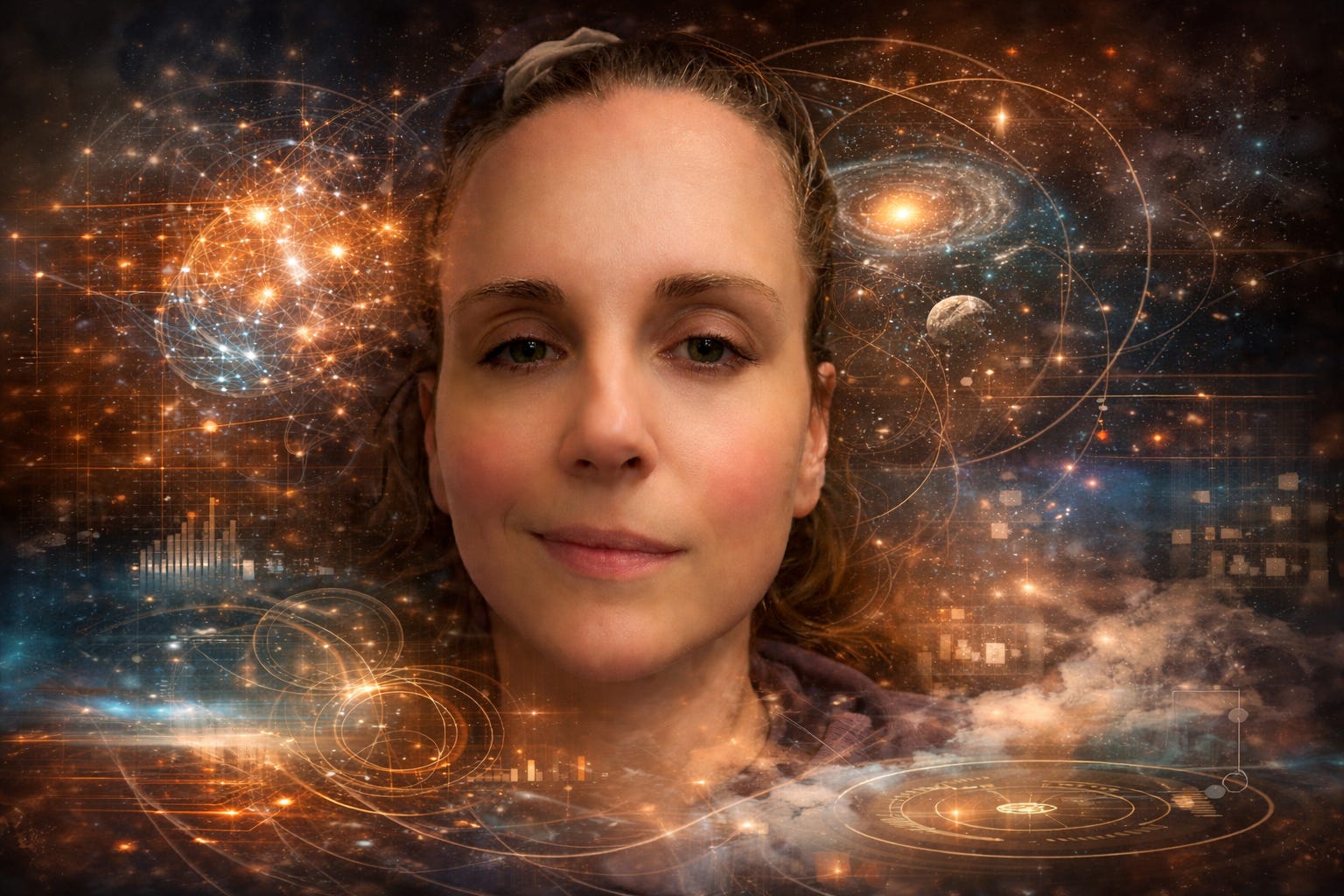
One side of my face tells the truth faster than the other.
It lifts first. It reacts first. It moves like it knows something the rest of me hasn’t translated yet.
That side is my left.
I noticed it before I knew what to do with it. In mirrors. In photos. In moments where my expression arrived slightly crooked—not wrong, just early on one side.
I was born left-handed.
Not as a personality trait. As a fact.
Then, in first grade, I broke my left arm.
School didn’t pause. Writing still needed to happen. So my body did what autistic bodies do best: it reorganized.
No one announced it as a decision. There was no conversation about dominance or plasticity or choice.
I just learned to write with my right hand.
That’s it. That’s the whole drama.
But my body didn’t switch sides.
It split the work.
My right hand learned letters. Straight lines. Legibility. Being understood on paper.
My left side stayed wild.
I still bat left. Play tennis left. Do cartwheels left. Snowboard left.
Anything that requires balance, power, momentum, intuition— that side stayed in charge.
My left side knows where I am in space. My right side knows how to translate me.
And my face remembers.
The left side moves with feeling. Emotion leaks out there first—joy, irritation, curiosity, grief. It doesn’t ask permission.
The right side is more careful. It waits. It checks the room.
People sometimes call it asymmetry.
But that’s not what it is.
It’s specialization.
My nervous system didn’t abandon itself to survive school. It compartmentalized.
One side learned how to be readable. The other never stopped being real.
I didn’t become right-handed.
I became bilingual.
My body learned two languages:
one for institutions
one for gravity
one for paper
one for play
My face is not uneven.
It’s an archive.
And every time the left side moves first, it’s not a flaw.
It’s the part of me that stayed free.
This is what double labor looks like before it ever becomes language.
Author’s note
This piece emerged from a conversation—not a debate—about precision, power, and the kinds of labor that are easiest to exploit because they’re hardest to see.
What follows is not a manifesto and not a diagnosis. It’s an attempt to name a form of metacognitive and relational work that many people are already doing, often quietly, often at cost, and almost always without recognition.
If this reads as unusually precise, layered, or self-aware, that is not an accident. For many people without institutional power, precision isn’t a rhetorical style—it’s a survival practice. It’s how you remain intelligible without being pathologized, and how you stay in relationship without disappearing.
This isn’t a claim about individual brilliance. It’s a question about ecology:
What kinds of intelligence do our systems depend on—while pretending not to see them?
Keep reading with a 7-day free trial
Subscribe to The Cognitive Ecologist to keep reading this post and get 7 days of free access to the full post archives.