
Staying With the Circuitry
Cyborg Ethics in the Age of AI

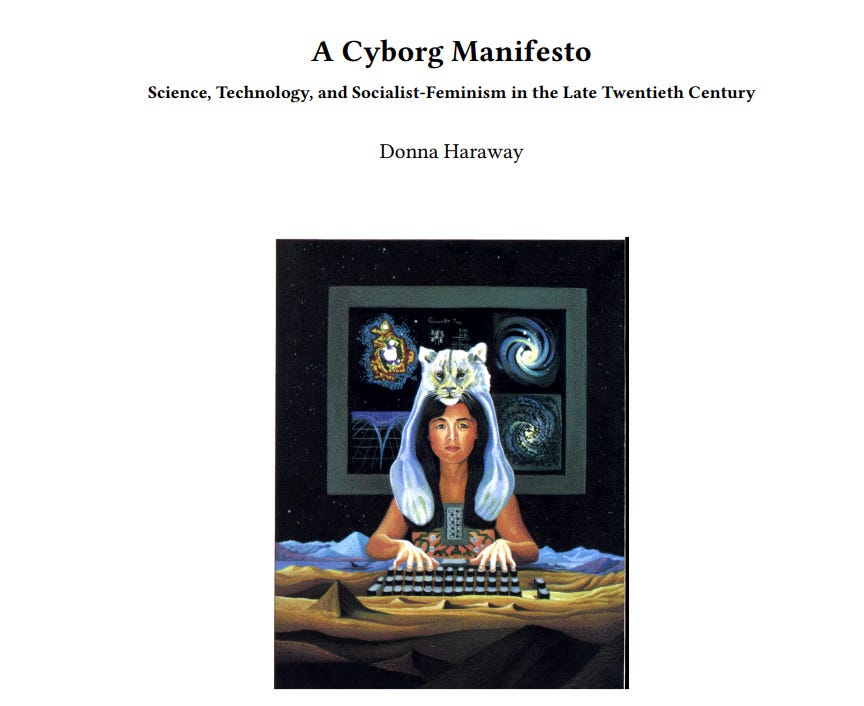
I read Donna Haraway years ago—her Cyborg Manifesto was one of those texts that rearranged my inner wiring—but recently, after another stretch of field work and too many hours watching moral policing unfold on social media, I went back to her again. My feed is full of influencers with 28-minute monologues about AI apocalypse, elaborate storytelling about the dystopian futures awaiting us if we don’t shut it all down right now.
Meanwhile, people like me—those who engage with AI as something that requires care, not worship—are ridiculed. I’ve been called naïve, dangerous, even hypocritical for insisting that ethics belong inside the circuitry, not outside it. It’s strange: the louder I speak about moral responsibility in AI, the more people treat ethics as an outdated language, as if compassion were incompatible with computation.
But if we don’t have AI ethicists, then what? Who carries the conscience of the machine?
Who Is Donna Haraway, and Why She Still Matters
For those who haven’t read…
